
AI for Realtors: A Practical Guide for Real Estate Agents
AI helps real estate agents save time on content, market research, and the busywork that eats your day. The highest-value first step is teaching AI to sound like you, then feeding it real local data. This guide covers what AI does well for agents, where it falls short, and how to start without sounding like everyone else.
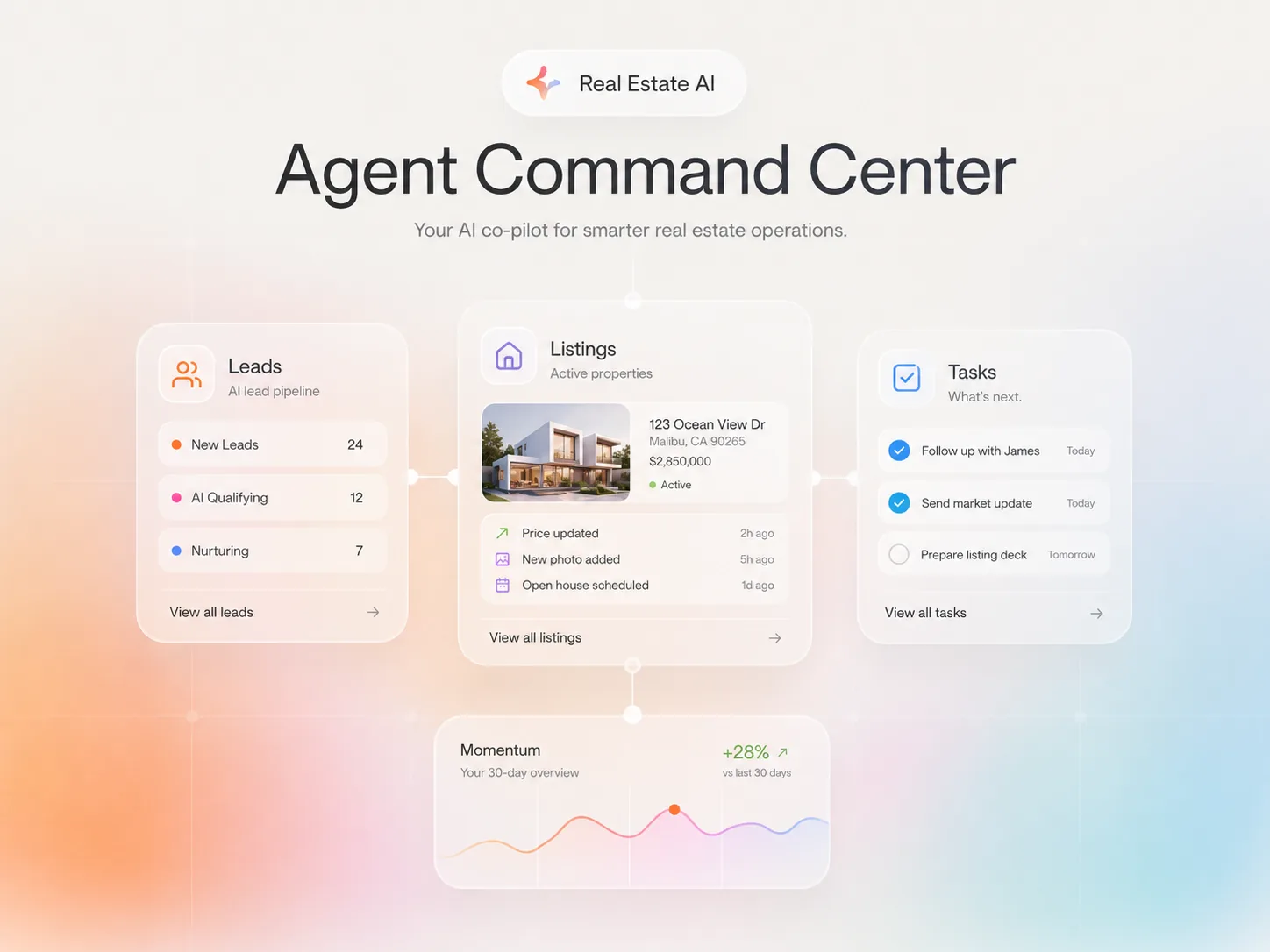
Here is the part nobody wants to hear. The tool is free and everyone has it. Every agent in your market is opening the same chat window and typing the same lazy prompts. So the AI is not your edge. What you put on top of it is. Your voice, your market knowledge, your judgment. That is the part nobody can copy.
Think of AI like a sharp new assistant on their first day. Fast, eager, great with words, and clueless about your market until you teach them. Give it nothing and you get something polished and forgettable. Give it your voice and real numbers and it starts to earn its seat.
What AI can and cannot do for your business
| AI is good at | AI is not good at (yet) |
|---|---|
| First drafts of posts, emails, and scripts | Knowing your market without your data |
| Summarizing long documents and contracts | Judgment calls that need your experience |
| Turning one idea into many formats | Reading a room or negotiating a deal |
| Research and first-pass market math | Being trusted without a human checking the work |
Read that right column twice. Everything on the left saves you time. Everything on the right is the job. AI handles the commodity work so you have more hours for the human work that actually wins clients.
How to build an AI system that sounds like you
Start with your voice, then your data, then your content. Do not start by asking AI to write for you. That order is why most agents quit after a week. They skip the foundation and wonder why the output sounds like a press release from a company nobody has heard of.
- Build your voice profile. Sit for one interview where the AI asks you a long list of questions about how you think, write, and talk. It compiles your answers into a document you feed the AI before every draft. Get the prompt that builds it here.
- Load your local market data. Give the AI real numbers from your market: active listings, months of supply, median price, days on market. It writes around the data. It does not invent it.
- Draft in your voice. Use the voice profile plus the data to draft posts, emails, and scripts. The machine handles the first pass. You edit for judgment.
- Check the work before it ships. Verify every number and claim against a source. Speed comes from the machine. Trust comes from you.
Worry about the inputs, and the outputs take care of themselves.
Download the cheat sheet (PDF)
1. Your voice profile: the step everything depends on
Generic AI content all sounds the same because everyone feeds it the same nothing. A voice profile fixes that. It is a saved document that captures how you sound at your best, and you paste it in before the AI writes a word. Here is how to build yours in one sitting.
2. Using AI for local market reports
AI does not know your market until you hand it the numbers. Pull six figures from your MLS, paste them in, and let AI turn them into a client-friendly update you can verify and send. A real number ends an argument that a vibe never could. See the full market-report workflow.
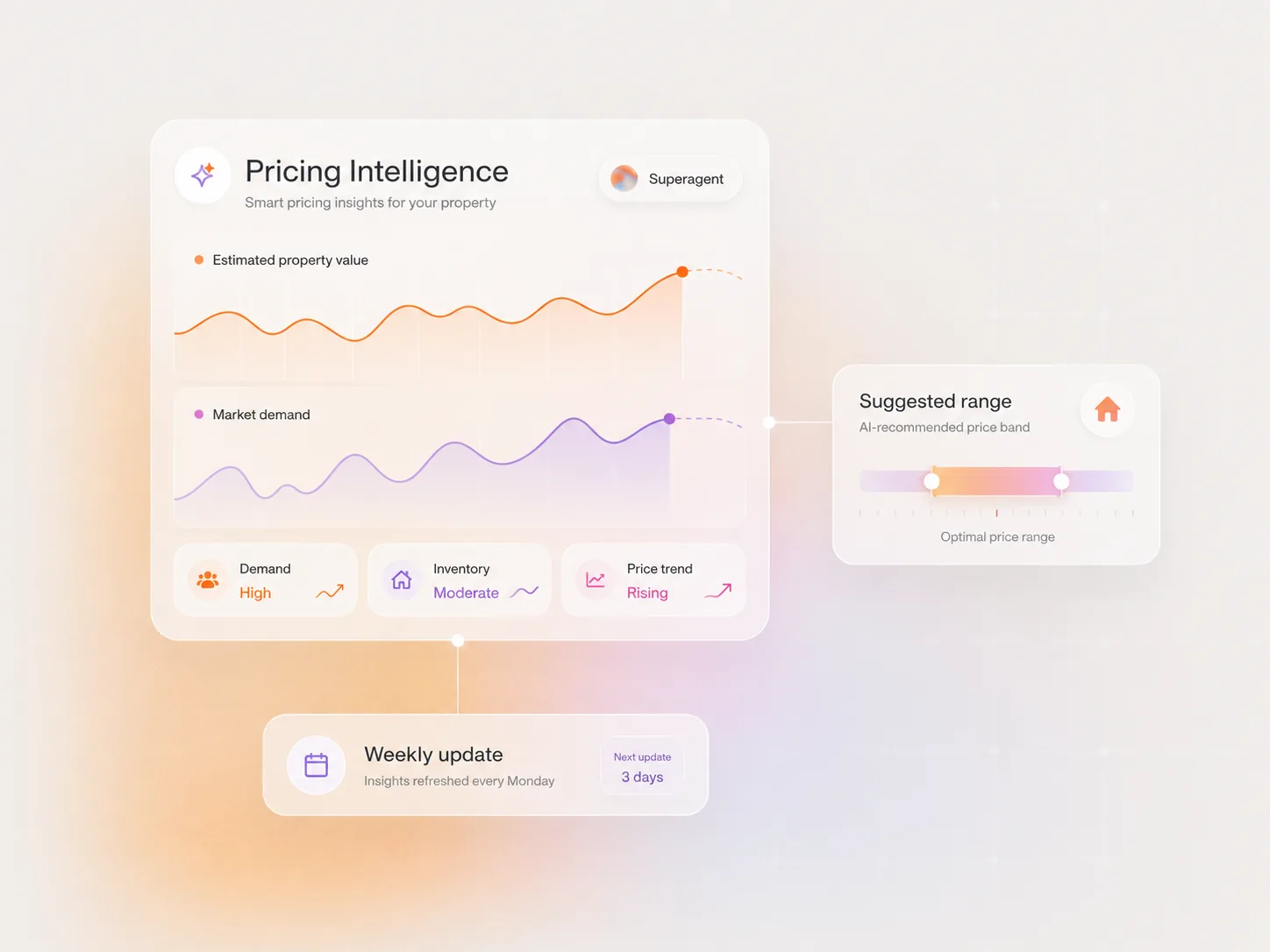
3. Writing listing descriptions with AI
Feed the AI the real facts of the home and your voice, not a blank prompt. Then edit out the filler and keep every line specific to that property. One warning that matters: fair housing applies to what AI writes for you, so describe the home, never the buyer. Get the listing-description method and a prompt template.
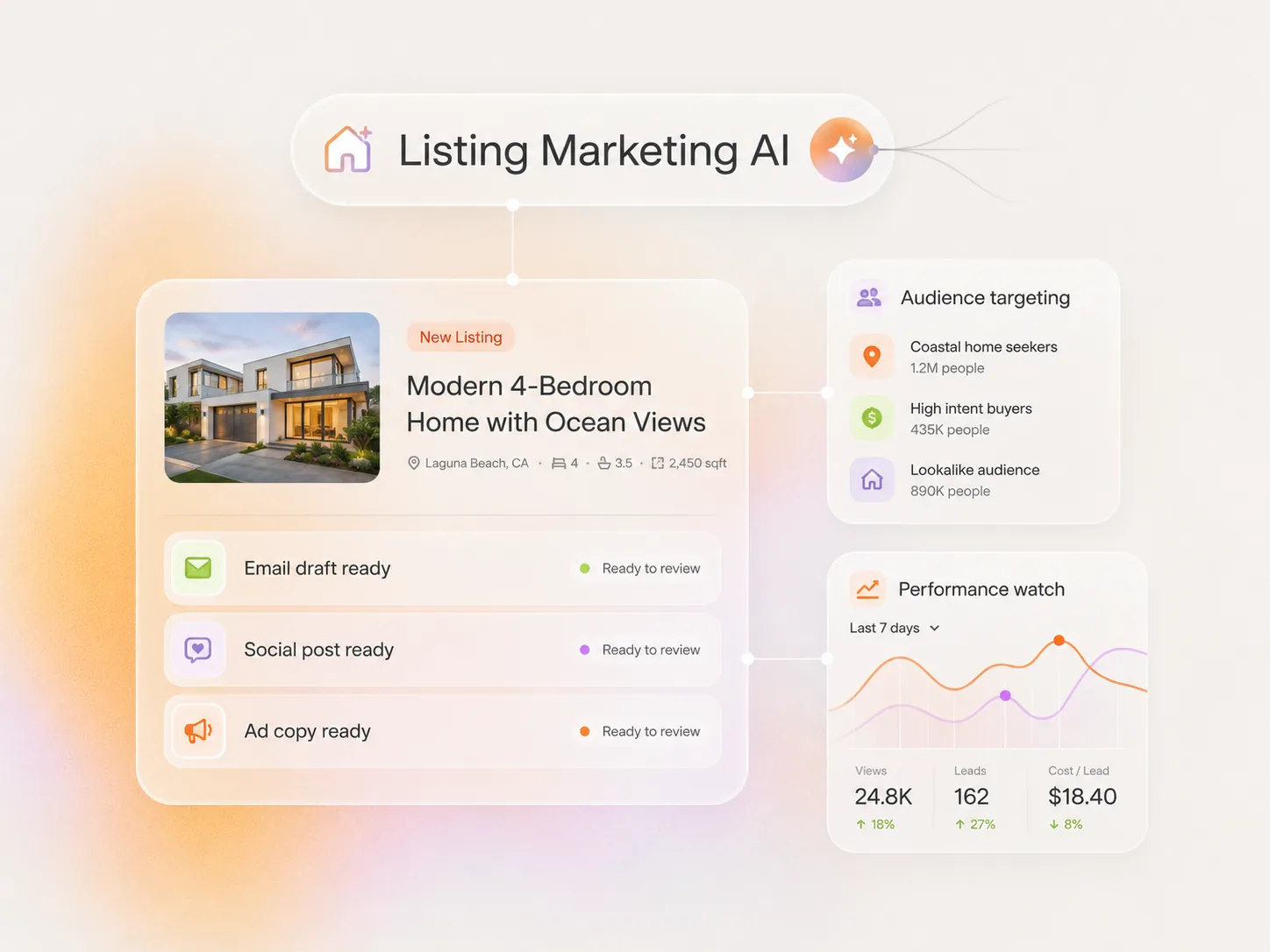
4. AI for client communication and follow-up
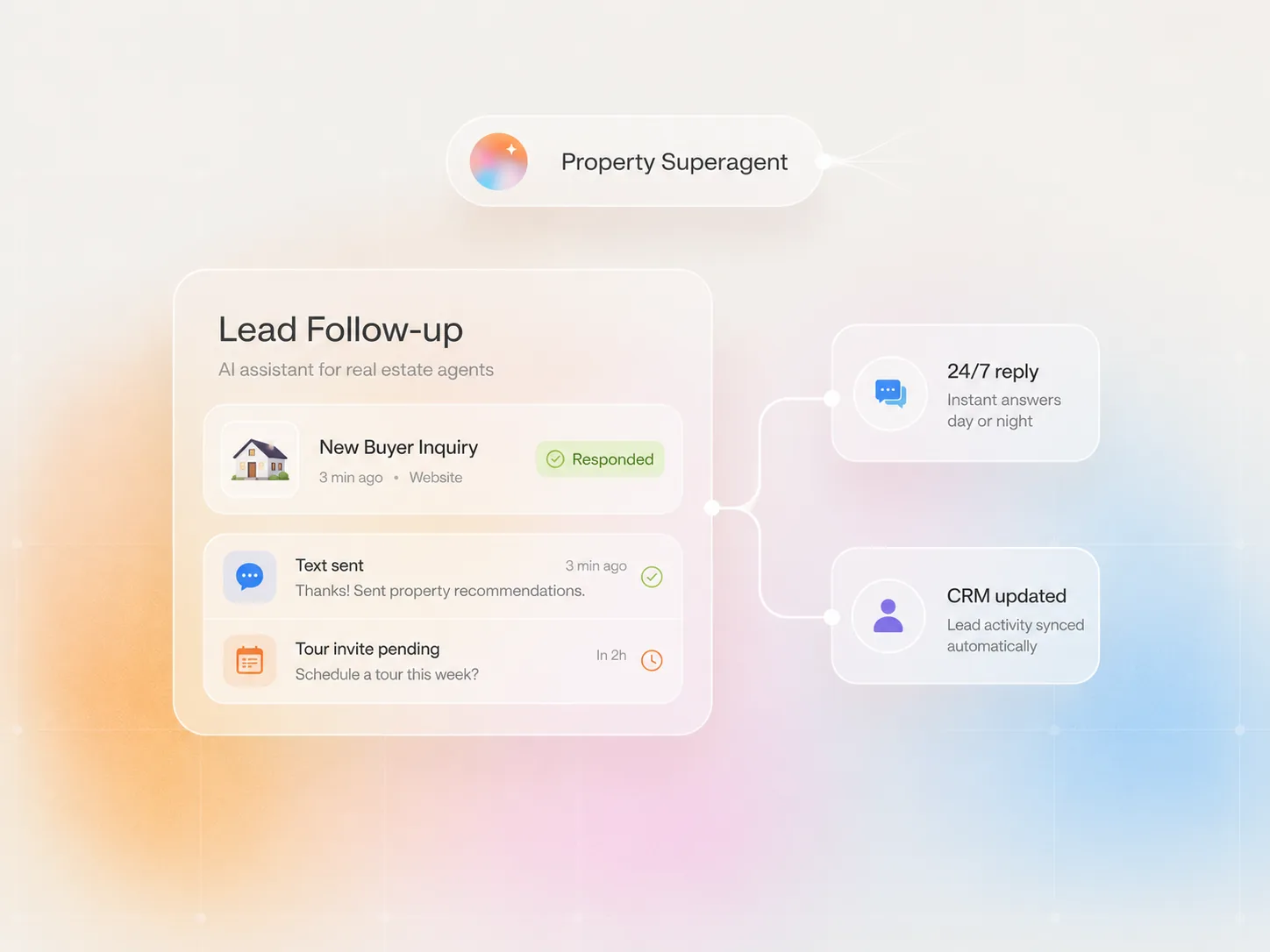
AI drafts recap emails, check-ins, and answers to common questions in a fraction of the time. The rule that keeps it safe is simple: AI drafts, you decide, and a human reads every message before it sends. The relationship is the job, so keep your hands on it. See the follow-up workflow.
Forward Loans
What do you want help with?
Forward Loans NMLS #2006640. Michael Creel NMLS #420674.
5. Where AI gets it wrong
AI will agree with you and sound confident while it is dead wrong. Made-up facts, bad math, wrong dates. For an agent, that is a problem with your name on it. Check every figure against a source before it goes out. Here is how to catch the mistakes.
6. The AI tools worth your time
You do not need ten subscriptions. You need a general writing assistant, a way to take notes from calls, a photo cleanup tool that respects MLS rules, and a notes helper. Pick by the job to be done, not the hype. See which categories earn a spot in your week.
7. Privacy and compliance: what not to paste into AI
One rule covers most of it: never paste a real client's private details into a public AI tool. No names tied to financials, no Social Security numbers, no contract terms that identify a person. Use anonymized examples and you keep the value without the exposure. Read the privacy and compliance basics.
8. Will AI replace real estate agents?
No. The job changes, but the part that matters does not. AI cannot read a room, negotiate a deal, or be the trusted person on the biggest financial decision of someone's life. It frees you up to do more of that. Read the honest answer.
Start with your voice profile
The fastest first win is teaching AI to sound like you. It takes about an hour, you do it once, and you use it on every piece after. Grab the prompt and run it today.
Get the AI Voice Profile prompt →
Frequently asked questions
Will AI replace real estate agents?
No. AI is fast at first drafts, research, and admin work, but it cannot read people, negotiate, or carry the trust a client puts in you on the biggest purchase of their life. The job shifts toward the human work. The agent who uses AI well just spends less time on busywork and more time with clients.
What is the best way for a Realtor to start using AI?
Start by building a voice profile so the AI sounds like you, then feed it real local data before you ask for anything. Most agents skip that and get generic output, then quit. Get the voice and the data right first, and everything you make after that gets easier and faster.
What is an AI voice profile?
A voice profile is a saved document that captures how you think, write, and talk. You paste it into the AI at the start of a session, before any request. It works like a filter, so the output sounds like you instead of like everyone else using the same tool.
Can AI write social media content for real estate agents?
Yes, and it does it well once you give it your voice profile and a real topic. It can turn one market update into a post, an email, and a short video script. You still read every piece, fix what feels off, and add the local detail only you know before it goes out.
Is it safe to use AI with client information?
It is safe when you keep private client data out of public AI tools. No names tied to financials, no Social Security numbers, no contract details that identify a person. Use anonymized examples instead, check your brokerage policy, and you keep almost all of the value with none of the exposure.
How do I keep AI content from sounding generic?
Two things. Give it a voice profile so it writes in your tone, and give it real specifics instead of a blank prompt. The home's actual features, your market's actual numbers, your own take on the neighborhood. Generic input creates generic output. Specific input is where your content starts to sound like you.
What AI tools should a real estate agent use?
Pick by the job, not the brand. A general writing assistant for drafts, a transcription tool for calls and meetings, a photo cleanup tool that follows your MLS rules, and a notes or scheduling helper. Build a habit around one before you add another, and skip anything you will not actually open.
How much time does AI actually save an agent?
Agents who use a writing assistant and a transcription tool regularly tend to save a few hours a week on writing and admin. The number grows once you stop rewriting bad drafts and start giving better instructions. The savings come from better inputs, not from the tool itself.
Can AI help me understand my local market?
Only if you feed it the numbers. AI has no live access to your MLS, so any market figure it produces on its own is a guess. Pull the real data, paste it in, and AI becomes a capable writer that turns your numbers into something clients can read and understand.
Do I need to know how to code to use AI as a Realtor?
No. If you can send a text message, you can use these tools. Everything in this guide runs through a normal chat window where you type in plain English. The skill that matters is not technical. It is knowing what to ask for and checking the work before it goes out.
About the author
Michael Creel is the founder of Forward Loans, a mortgage brokerage based in Phoenix. He spent 20-plus years in mortgage and 15-plus in marketing before bringing both under one roof. He writes about how real estate agents can use AI, content, and systems to grow. Personal NMLS #420674. Forward Loans NMLS #2006640.
Related guides
- Build your AI voice profile (free prompt)
- The AI voice profile for Realtors
- Where AI gets it wrong
- How to Claude: the one-page cheat sheet
- Claude for real estate agents: a beginner's guide
- How to set up Claude Cowork for your business
- Compress your voice profile into a memory file
- Why agents are switching from ChatGPT to Claude Cowork
Free download: the How to Claude cheat sheet
One page on getting started with Claude AI: what it does best, how to install it in about five minutes, which model to use, and a prompt template that works. Here is a preview.
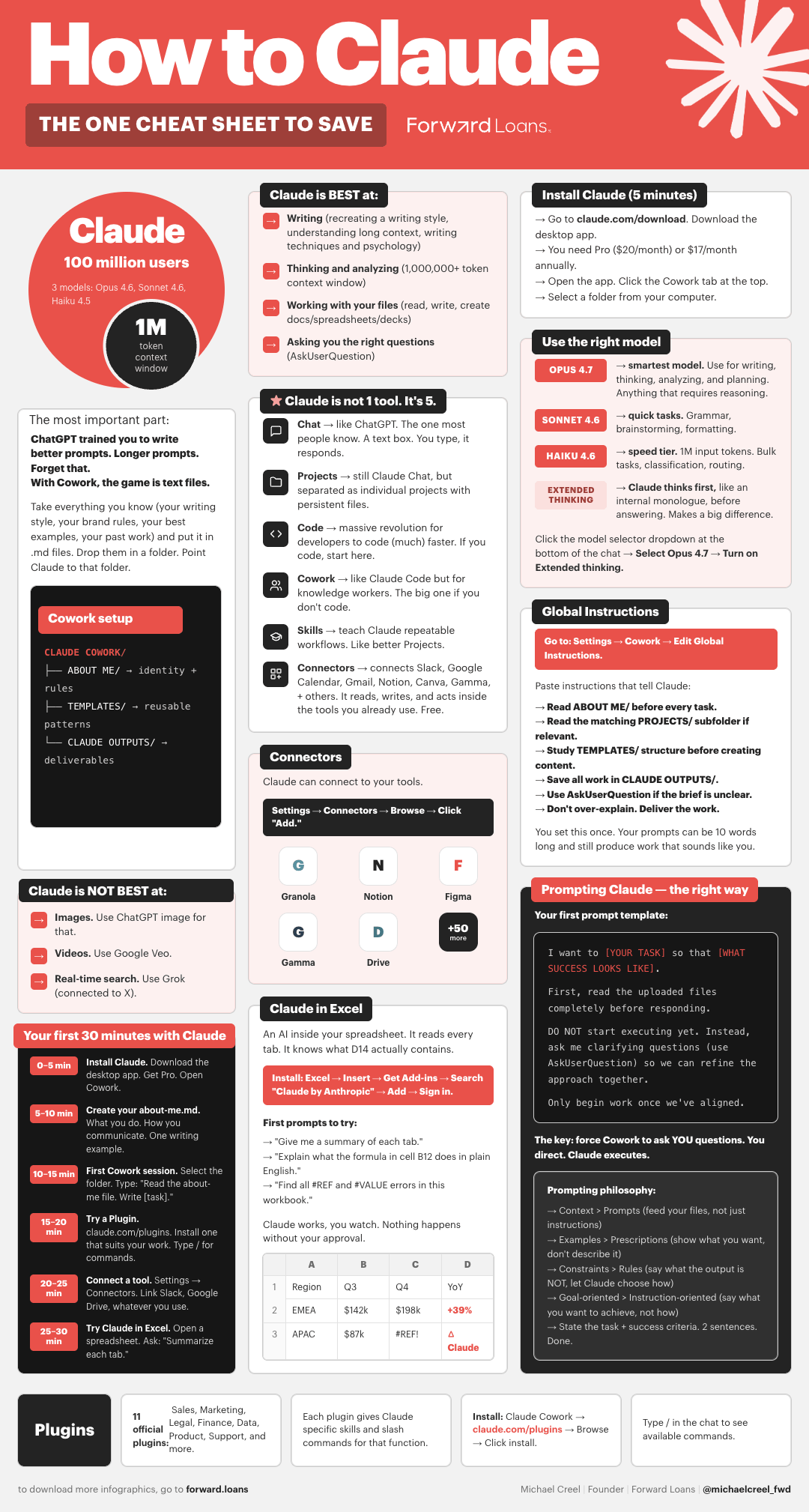
Download the cheat sheet (PDF)
This guide is educational and written for real estate professionals who want to use AI in their business. Forward Loans is a mortgage brokerage and a non-delegated correspondent mortgage lender, NMLS #2006640. Nothing here is legal, tax, or financial advice. Always follow your brokerage and MLS rules.